

Governing Faster
Faster buses, a charter commission in a hurry, and the state’s shrinking population

Are you on your Community Board? We're hosting a mixer on Tuesday, July 21 to share best practices on maximizing your impact as a board member. Sign up here!
Next Stop
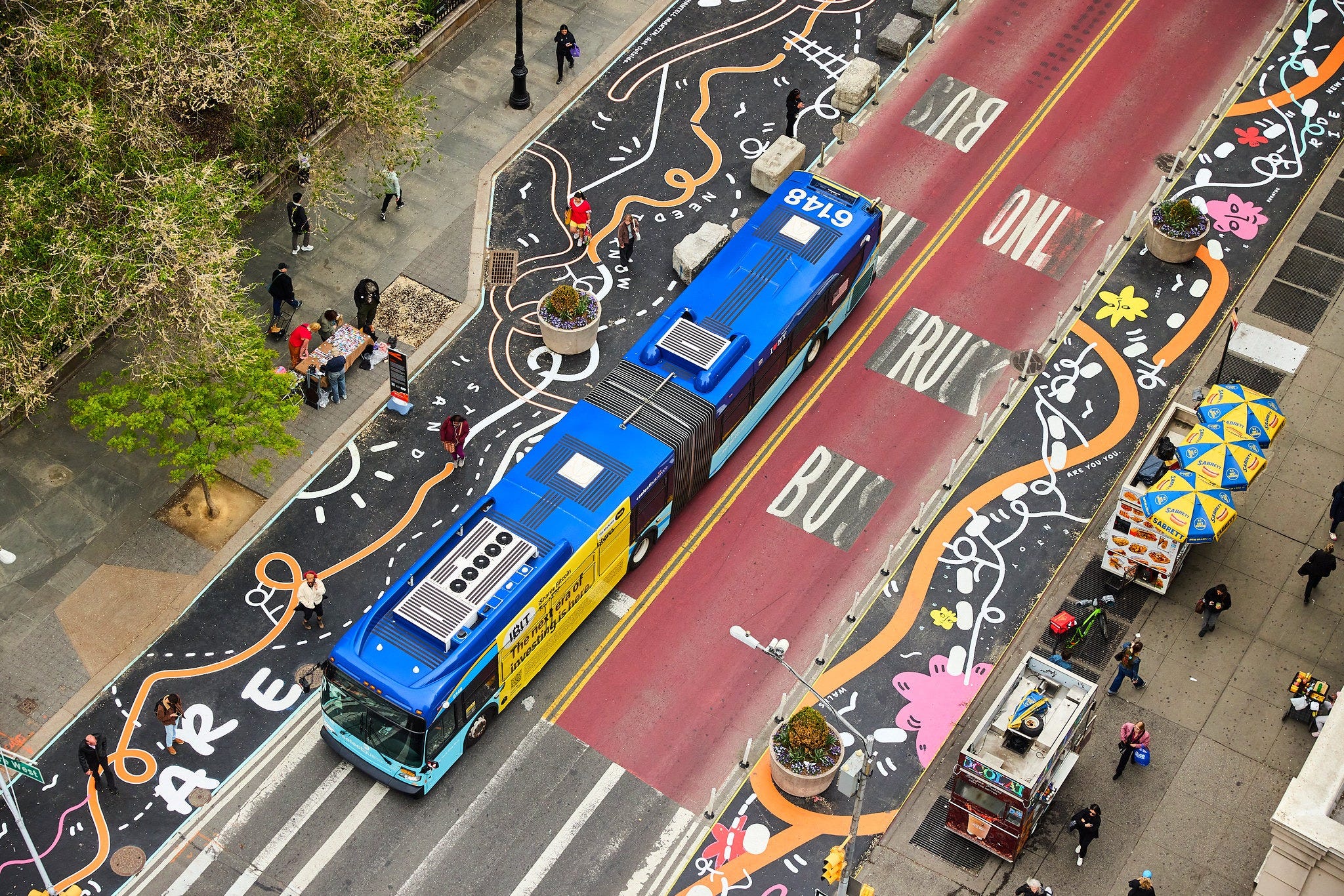
Last week, Mayor Mamdani and Governor Hochul unveiled Next Stop, a joint plan from the city’s Department of Transportation (DOT) and the Metropolitan Transportation Authority (MTA) to speed up bus service. It sets up 50 priority corridors and five future rapid routes, backed by $882 million over five years, and targets 20% faster service with all-door boarding in 2027. New York runs the slowest big-city buses in the country and carries more daily riders than the next several cities’ systems combined.
The mayor’s campaign notwithstanding, faster buses is a familiar promise. This plan is the latest in a long line of plans to speed up service. Mayor Adams promised 150 miles of bus lanes and convened a transit summit that fell apart within the year, once DOT said it lacked the staff and budget to build them. Before him, New York City Transit ran a separate plan of its own under Andy Byford. Mayor de Blasio’s 2019 Better Buses plan also set targets that the city then missed as Cuomo’s MTA canceled Select Bus Service expansion to save money. The city and the state say this time is different. They say they now have a commitment from the top, common investments, and a shared stake in the outcome. For the mayor, faster buses delivers on a campaign promise. For the MTA, they answer the pressure for free buses without giving up the fare.
We are thrilled to see a credible plan for fast buses. In sprawling areas of the city, especially the outer boroughs but also crosstown Manhattan, fast reliable buses will take cars off the road—alleviating traffic and improving safety. That said, we are not sure why all of this will take so long. The first rapid corridor, on Flatbush Avenue, is not slated to open until 2030, and the rest rolls out across the full five years. Much of that time is dedicated to design, community review, and two-agency coordination rather than heavy construction. We would like to see a similar shared commitment to make construction move as fast as the planning.
COGE’s First Report
The Commission on Government Efficiency (COGE), Mayor Mamdani’s charter revision commission, released its preliminary report on July 2. Convened this spring, the commission held seven public hearings and took hundreds of written submissions before publishing. The report sorts its ideas into four areas: public space access, permitting and contracting, modernizing outdated systems, and fiscal reserves. Its proposals could reach voters as ballot questions in November. If you haven’t, check out our articles in Vital City and Searchlight where we propose charter reforms.
We are most excited about the permitting and public space sections. A single housing project can need separate sign-offs from the Department of Buildings, the Fire Department, Environmental Protection, and Housing Preservation and Development, each on its own schedule. The Buildings Department alone runs roughly 275,000 applications a year through a borough structure that has barely changed in a century. We testified for a single permitting authority, pointing to San Francisco, which cut its processing time after consolidating intake. The report cites our proposal, and we hope COGE follows through. The report also mentions streamlining a DOT process that demands endless public notice and comment and reviews before every new bike lane or other alternative road use. This “bike-lash” process is ripe for cutting and COGE should be commended for it.
The civil service section leaves some to be desired. More than 13,000 city jobs sit vacant, some agencies run vacancy rates above 10%, and the wait between passing an exam and starting work can stretch past a year. We had proposed a charter requirement that the mayor publish a five-year workforce plan, modeled on the existing capital strategy, to make every administration accountable for how it staffs the city. COGE instead seems to say that civil service reform, which it only mentions glancingly in the context of needing to improve civic tech, is mostly outside the scope of the charter. We hope they reconsider.
COGE must finalize its proposals this month to reach the November ballot, a quicker turnaround than past commissions that produced lasting change. We look forward to what it puts forward, and we hope it keeps working into next year.
In Searchlight, we have more to say about civil service reform in the context of the mayor’s new “PIT” Crews.
Who’s Leaving New York
The Citizens Budget Commission released a new tracker this month, Competitive NYS, compiling state data on population, taxes, and jobs. It shows that every other state has gained more residents from New York than it has sent back. New York’s share of the nation’s millionaires also fell more than any other state’s over the past decade. The organization tied that decline to billions in forgone tax revenue.
The millionaire figure is already being read as a warning about Mayor Mamdani’s tax plans, but that reading runs ahead of the data. The city had more millionaires in 2022 than in 2010; its share of the national total slipped only because Florida, California, and Texas added them faster. And the people who leave rarely leave for low taxes. Most of the income that left the city from 2019 to 2023 landed in other parts of New York State, ahead of Florida. Further, the Fiscal Policy Institute found the top 1% leave at a quarter the rate of everyone else, most of them for other high-tax states. Other researchers have found similar results.
The more important takeaway, though, is the topline population change. Every New Yorker who leaves takes a piece of the state’s clout with them—a share of its House seats, its electoral votes, its federal funding—to wherever they land. Texas and Florida are growing; New York is not. If you want the country to look more like Texas and Florida, current trends will get you there. If you want more of New York, we have to build.